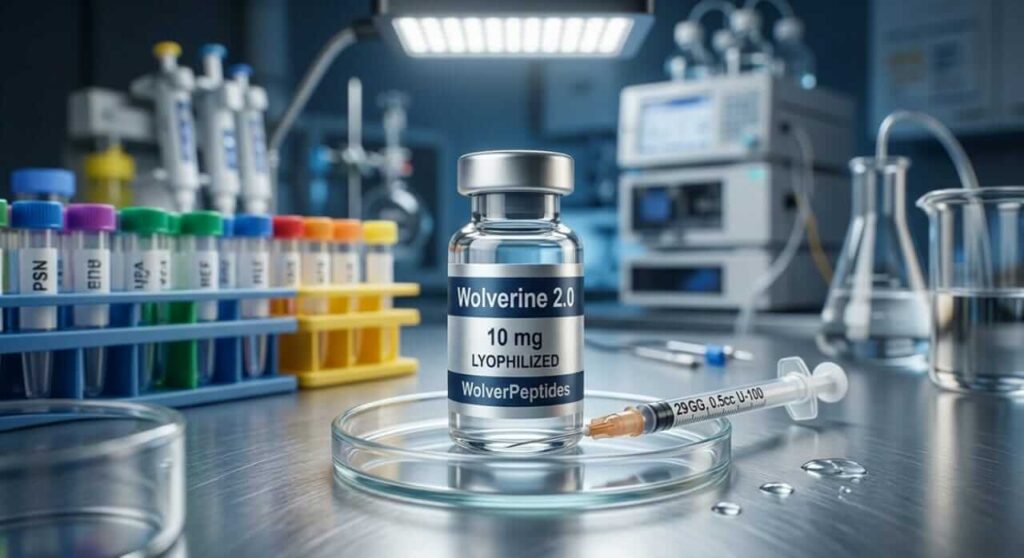
What is Wolverine 2.0?
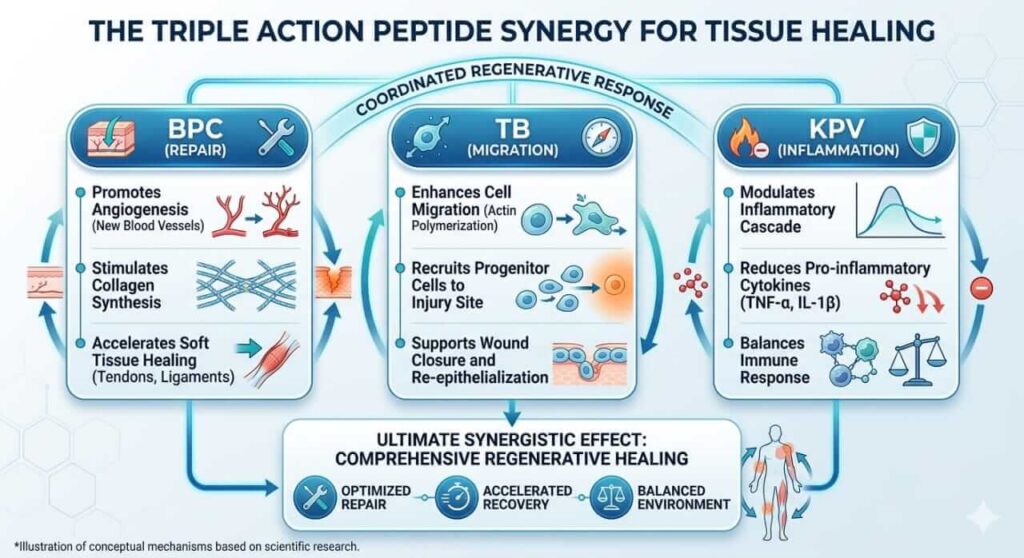
The Wolverine 2.0 Peptide Blend represents a significant shift in the 2026 research landscape, moving from single-compound studies to complex synergistic assays. By combining BPC-157, TB-500 (Thymosin Beta-4 fragment), and the tripeptide KPV, researchers can now observe “multi-pronged” signaling in a single in vitro model.
While BPC-157 is often studied for localized connective tissue signaling, the addition of TB-500 and KPV in the Wolverine 2.0 Peptide Blend allows for the investigation of systemic cell migration and potent inflammatory modulation simultaneously.
How do BPC-157 and TB-500 work together in vitro?
The core of Wolverine 2.0 is the synergy between the pentadecapeptide BPC-157 and the 43-amino acid fragment TB-500.
Research suggests that BPC-157 upregulates growth hormone receptors in tendon fibroblasts. However, for a repair model to be successful, those fibroblasts must migrate to the site of “injury.” This is where TB-500 comes in. By regulating G-actin and F-actin polymerization, TB-500 provides the “locomotion” for cells to move toward the signaling triggers set by BPC-157.
Key Mechanism:
“When compared to standalone BPC-157 5mg, the Wolverine 2.0 blend offers a significantly broader signaling profile for soft tissue models.”
The Role of KPV in Inflammatory Modulation
Unlike traditional corticosteroids which can be cytotoxic in long-term cultures, KPV is studied for its ability to reduce NF-κB inflammatory signaling at nanomolar concentrations. For researchers, this means observing tissue recovery in an environment that isn’t overwhelmed by oxidative stress.
Comparative Analysis: Wolverine 2.0 vs. Standalone Peptides
| Feature | BPC-157 Alone | Wolverine 2.0 Blend |
| Primary Target | Tendons/Ligaments | Comprehensive Soft Tissue |
| Cell Migration | Low/Moderate | High (via TB-500) |
| Inflammation Control | Moderate | High (via KPV) |
| 2026 Batch Integrity | Standard | High-Stability Lyophilized |
2026 Research Benchmark: Lyophilized Stability
A common question in laboratory procurement is how a single vial can maintain the integrity of three distinct peptide sequences.
In our 2026 batch testing, we’ve found that the secret lies in the pH-balanced lyophilization process. Because BPC-157 (~1655 Da) and TB-500 (~4963 Da) have different physical stability parameters, Mile High Compounds uses a specialized “slow-freeze” cycle to prevent peptide aggregation. This ensures that when you reconstitute the vial, the molecular ratio remains exactly as intended.
Researcher FAQ
What is the molecular weight of the Wolverine 2.0 blend?
As a complex blend, it contains multiple weights; primarily BPC-157 (~1655 Da), TB-500 (~4963 Da), and KPV (~383 Da).
Can Wolverine 2.0 be stored at room temperature?
For 2026 purity benchmarks, always store lyophilized vials at 2°C–8°C. Once reconstituted, stability decreases significantly.
Where can I buy verified Wolverine 2.0?
You can Order Wolverine 2.0 Online directly from Mile High Compounds. We offer a 5% instant discount for all Bitcoin and USDT transactions to ensure your procurement is as fast as your research.
Pushing the Boundaries of Regeneration
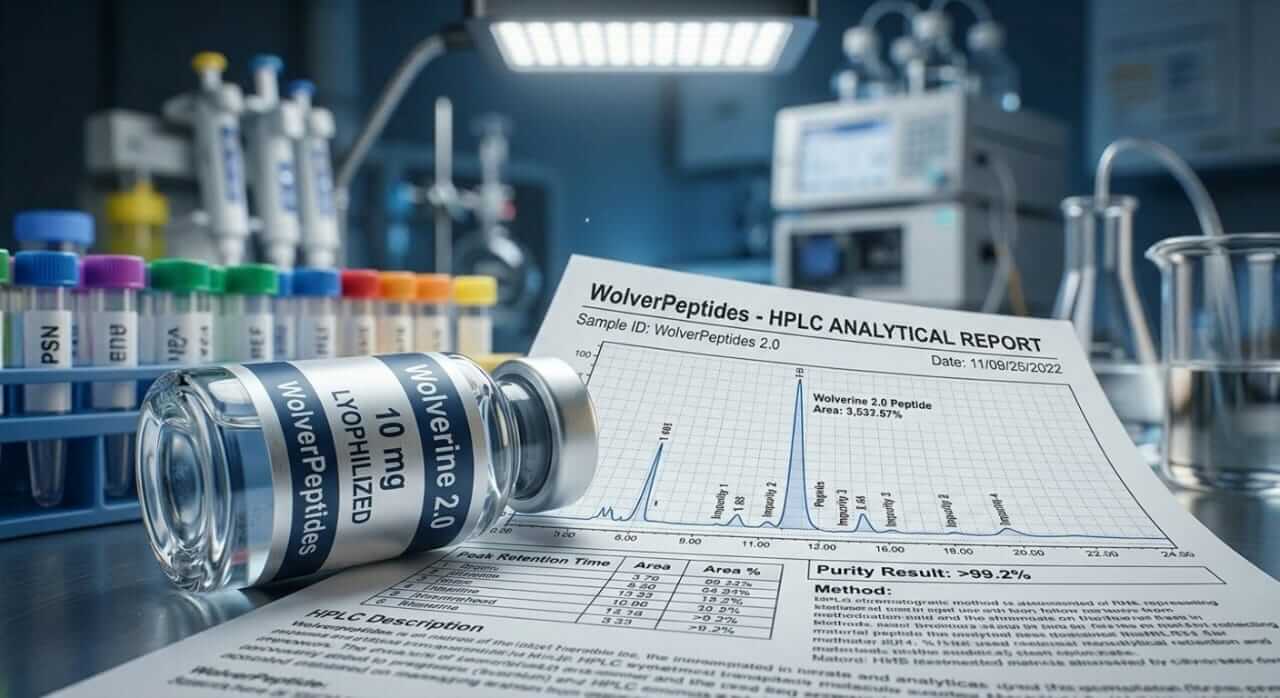
As we continue to map the complex interactions of the “Wolverine” stack, the need for HPLC-verified materials has never been higher. By utilizing a verified blend, laboratories can ensure that their 2026 data reflects true biological synergy rather than chemical inconsistency.
Ready to upgrade your next project? Buy Wolverine 2.0 with Bitcoin today and get priority shipping to the UK, CA, or AU.”]
Disclaimer: This compound is intended strictly for in vitro laboratory research. It is not approved for human or animal administration. All sales are final.